姚鑫杰,昆明理工大学信息工程与自动化学院副教授,云南省人工智能重点实验室成员,所在团队由余正涛教授带领。2025 年获天津大学智能与计算学部博士学位,师从朱鹏飞教授、王煜教授和胡清华教授。Xinjie Yao (姚鑫杰) is an Associate Professor with the Faculty of Information Engineering and Automation at Kunming University of Science and Technology (KUST), and a member of the Yunnan Key Laboratory of Artificial Intelligence, led by Prof. Zhengtao Yu (余正涛). He received his Ph.D. in 2025 from the College of Intelligence and Computing, Tianjin University (TJU), under the supervision of Prof. Pengfei Zhu (朱鹏飞), Prof. Yu Wang (王煜), and Prof. Qinghua Hu (胡清华).
已发表学术论文 20 余篇,包括 ICML、NeurIPS、AAAI、IJCV、IEEE TMM、IEEE TCYB、PR 等重要会议与期刊。研究聚焦端到端自动化科研系统(AI4R)、人工智能驱动的科学研究(AI4S)与智能无人系统,重点探索人工智能驱动的腐蚀分析与预测、面向材料科学的多模态数据融合,以及适用于真实场景、尤其是低空环境的可扩展与可靠智能无人系统。His research has resulted in over 20 publications, including multiple papers in premier venues such as ICML, NeurIPS, AAAI, IJCV, IEEE TMM, IEEE TCYB, and PR. His work lies at the intersection of end-to-end automated research systems (AI4R), AI for science (AI4S), and intelligent unmanned systems. In particular, he focuses on AI-driven corrosion analysis and prediction, as well as multimodal data fusion for materials science, while advancing scalable and reliable intelligent unmanned systems for real-world deployment, especially in low-altitude environments.
教育经历Education
2021年9月—2025年11月,天津大学智能与计算学部Sept. 2021 – Nov. 2025, College of Intelligence and Computing, Tianjin University
2018年9月—2021年6月,中国石油大学(华东)计算机科学与技术学院Sept. 2018 – Jun. 2021, College of Computer Science and Technology, China University of Petroleum (East China)
2014年9月—2018年6月,华北电力大学计算机系Sept. 2014 – Jun. 2018, Department of Computer, North China Electric Power University
Our research asks how intelligent systems can learn continuously in complex, dynamic and collaborative environments and help solve real scientific problems. We connect foundational methods with practical applications across four directions.
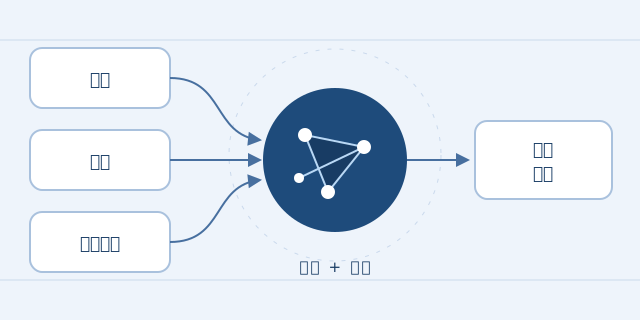
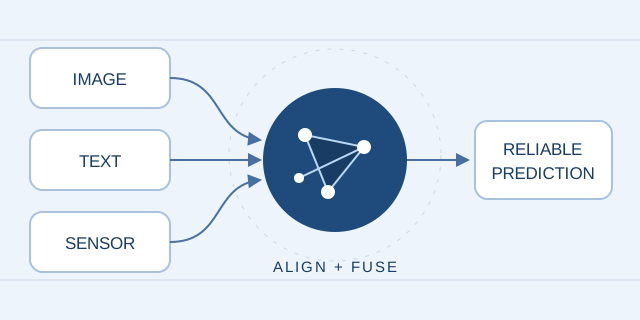
We study unified representations, cross-modal alignment and reliable fusion across images, text, thermal imagery and sensor signals, focusing on robust learning with missing modalities, conflicting views and incomplete data.
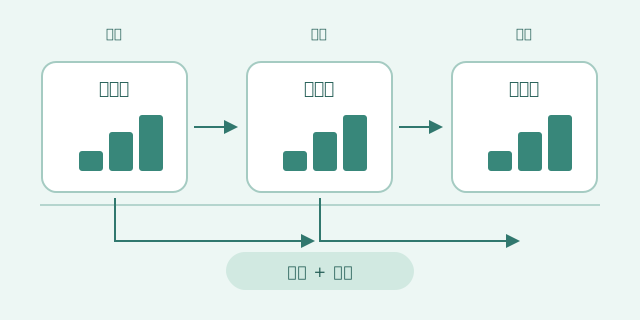
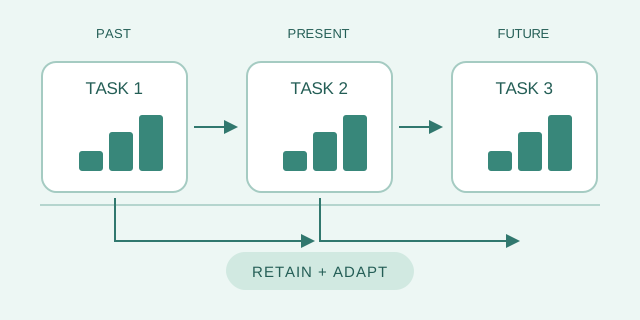
Retain prior knowledge → learn new tasks → continue adapting
02 / Continual Learning
Continual Learning
For open environments where data, classes and conditions evolve, we study how to update and transfer knowledge while mitigating catastrophic forgetting, including class-incremental learning across visible and thermal modalities.
Class-incremental learning · Forgetting mitigation · Cross-modal transfer
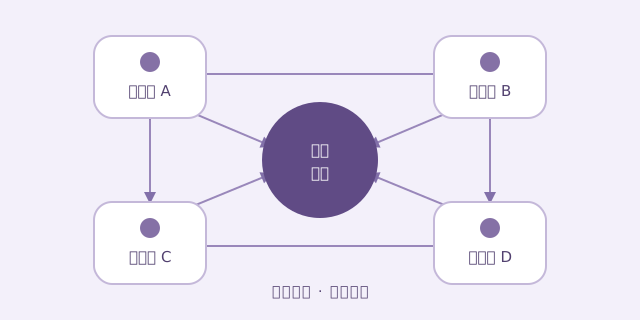
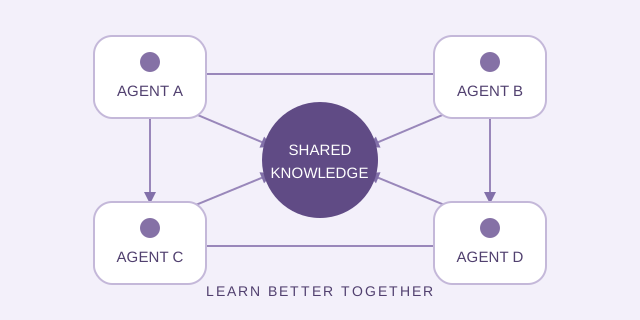
We explore knowledge sharing, collaborative learning and socialized co-evolution among agents, enabling models with different tasks and data to improve through mutual assistance and collective intelligence.
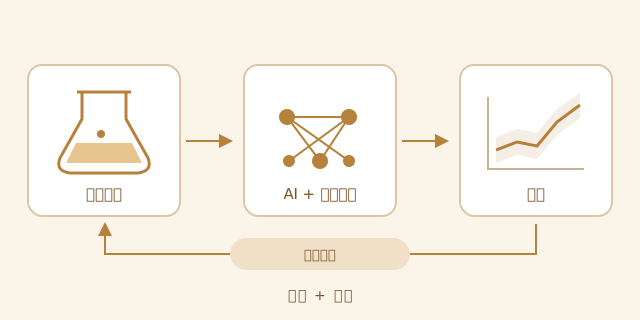
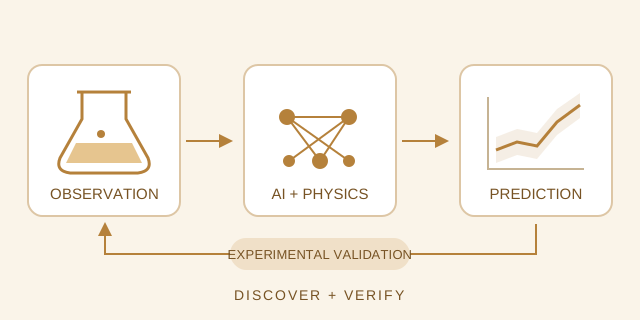
Scientific data → intelligent models → prediction and validation
04 / AI for Science
AI for Science
We combine machine learning with scientific mechanisms and experimental evidence to study materials corrosion, degradation assessment and performance prediction, integrating visual, electrochemical and environmental data.
[2026-09]《学习解决跨视图冲突,实现可靠的多视图分类》被 Pattern Recognition(PR,CCF-B,中科院一区 Top,JCR Q1,IF=7.6)录用。"Learning to Resolve Cross-View Conflict for Reliable Multi-View Classification" has been accepted by Pattern Recognition (PR, CCF-B, CAS Q1 Top journal, JCR Q1, IF=7.6).
[2026-05]《结合计算、实验与人工智能辅助方法研究海洋环境中铝合金的多尺度腐蚀退化》被 Progress in Materials Science(PMS,中科院一区 Top,JCR Q1,IF=42.9)录用。"Multi-scale corrosion degradation of aluminum alloys in marine environment studied by computational, experimental, and artificial intelligence-assisted approaches" has been accepted by Progress in Materials Science (PMS, CAS Q1 Top journal, JCR Q1, IF=42.9).
[2026-05]《基于可解释视觉—阻抗多模态零样本学习的有机涂层退化分级》被 Corrosion Science(CS,中科院一区 Top,JCR Q1,IF=10.3)录用。"Degradation grading of organic coatings via explainable vision–impedance multimodal zero-shot learning" has been accepted by Corrosion Science (CS, CAS Q1 Top journal, JCR Q1, IF=10.3).
[2026-04]《可见光—热红外识别中的不完整跨模态类增量学习》被 Pattern Recognition(PR,CCF-B,中科院一区 Top,JCR Q1,IF=7.6)录用。"Incomplete cross-modality class-incremental learning in visible-thermal recognition" has been accepted by Pattern Recognition (PR, CCF-B, CAS Q1 Top journal, JCR Q1, IF=7.6).
[2026-03]《Droc:面向高维视觉系统鲁棒感知的开放集半监督学习》被 IEEE 国际多媒体与博览会(ICME,CCF-B)录用。"Droc: open-set semi-supervised learning for robust perception in high-dimensional visual systems" has been accepted by International Conference on Multimedia and Expo (ICME, CCF-B).
[2025-09]《图助图:多智能体图社会化学习》被神经信息处理系统大会(NeurIPS,CCF-A)录用。"Graphs help graphs: multi-agent graph socialized learning" has been accepted by conference on Neural Information Processing Systems (NeurIPS, CCF-A).
[2025-07]《利用语义分割与时间预测分析海洋大气中划痕涂覆钢板的失效与腐蚀》被 Engineering Failure Analysis(EFA,中科院二区,JCR Q1,IF=5.7)录用。"Failure analysis and corrosion prediction of scratch-coated steel plate in marine atmosphere using semantic segmentation and temporal prediction" has been accepted by Engineering Failure Analysis (EFA, CAS Q2 journal, JCR Q1, IF=5.7).
[2025-06]《可见光—热红外跨模态类增量学习》被 Expert Systems with Applications(ESWA,CCF-C,中科院一区 Top,JCR Q1,IF=7.55)录用。"Visible-thermal cross-modality class-incremental learning" has been accepted by Expert Systems With Applications (ESWA, CCF-C, CAS Q1 Top journal, JCR Q1, IF=7.55).
[2025-05]《社会化共同进化:通过跨任务协作迈向更好的世界》被国际机器学习大会(ICML,CCF-A)录用。"Socialized coevolution: advancing a better world through cross-task collaboration" has been accepted by International Conference on Machine Learning (ICML, CCF-A).
[2024-12]《工业场景中的零样本学习:全新大规模基准、挑战与基线》被 AAAI 人工智能大会(AAAI,CCF-A)录用。"Zero-shot learning in industrial scenarios: new large-scale benchmark, challenges and baseline" has been accepted by AAAI Conference on Artificial Intelligence (AAAI, CCF-A).
[2024-12]团队获 2024 年昇腾 AI 创新大赛全国总决赛高校赛道铜奖。Our team won the Bronze Medal in the University Track of the 2024 National Finals of the Ascend AI Innovation Competition.
[2024-11]获国家奖学金。I have been awarded the National Scholarship.
[2024-11]团队获 2024 年昇腾 AI 创新大赛天津区域赛高校赛道金奖。Our team won the Gold Medal in the University Track of the 2024 Tianjin Regional Finals of the Ascend AI Innovation Competition.
[2024-05]获天津大学智能与计算学部“杰出青年”称号。I have been recognized as the "Outstanding Youth" by the College of Intelligence and Computing at Tianjin University.
[2024-05]《社会化学习:通过多智能体协作实现彼此提升》被国际机器学习大会(ICML,CCF-A)录用。"Socialized learning: making each other better through multi-agent collaboration" has been accepted by International Conference on Machine Learning (ICML, CCF-A).
[2024-03]《面向不完整多模态聚类的集成异构图注意力网络》被 International Journal of Computer Vision(IJCV,CCF-A,中科院二区,JCR Q1,IF=11.6)录用。"Integrated heterogeneous graph attention network for incomplete multi-modal clustering" has been accepted by International Journal of Computer Vision (IJCV, CCF-A, CAS Q2, JCR Q1, IF=11.6).
[2024-02]《多视图深度子空间聚类网络》被 IEEE Transactions on Cybernetics(TCYB,CCF-B,中科院一区 Top,JCR Q1,IF=9.4)录用。"Multi-view deep subspace clustering networks" has been accepted by IEEE Transactions on Cybernetics (TCYB, CCF-B, CAS Q1 Top journal, JCR Q1, IF=9.4).
[2022-02]《面向不完整多视图学习的潜在异构图网络》被 IEEE Transactions on Multimedia(TMM,CCF-B,中科院一区 Top,JCR Q1,IF=8.4)录用。"Latent heterogeneous graph network for incomplete multi-view learning" has been accepted by IEEE Transactions on Multimedia (TMM, CCF-B, CAS Q1 Top journal, JCR Q1, IF=8.4).
按年份列出的论文 · GB/T 7714Publications by Year · GB/T 7714
收录 News 中全部 14 篇论文,按正式出版年份倒序排列;已分配未来卷期的论文按卷期年份列出,尚未正式出版的论文按录用年份列出并标注状态。采用 GB/T 7714—2015 顺序编码制:超过三位作者列前三位后加 et al.;[J] 为期刊论文,[C] 为会议论文。中文译名仅供理解,规范引用保留原始题名。All 14 papers mentioned in News are listed below in descending order of formal publication year. Papers assigned to future volumes are grouped by the volume year; other accepted papers are grouped by acceptance year and marked accordingly. References follow GB/T 7714—2015: the first three authors are followed by et al.; [J] denotes journal articles and [C] conference papers. Chinese title translations are provided for reading; formal citations retain the original titles.
2027
学习解决跨视图冲突,实现可靠的多视图分类
LIAO Y, HOU S, WANG H, et al. Learning to resolve cross-view conflict for reliable multi-view classification[J]. Pattern Recognition, 2027, 183: 114917. DOI: 10.1016/j.patcog.2026.114917.
PR论文 ↗Paper ↗2026 年录用;已分配 2027 年正式卷期。Accepted in 2026; assigned to the 2027 journal volume.
2026
结合计算、实验与人工智能辅助方法研究海洋环境中铝合金的多尺度腐蚀退化
JI Y, LIU Z, YAO X, et al. Multi-scale corrosion degradation of aluminum alloys in marine environment studied by computational, experimental, and artificial intelligence-assisted approaches[J]. Progress in Materials Science, 2026, 162: 101740. DOI: 10.1016/j.pmatsci.2026.101740.
YAO X, BI Y, WANG Y, et al. Incomplete cross-modality class-incremental learning in visible-thermal recognition[J]. Pattern Recognition, 2026, 179: 113681. DOI: 10.1016/j.patcog.2026.113681.
LI J, YAO X, WANG Y, et al. Droc: open-set semi-supervised learning for robust perception in high-dimensional visual systems[C]//Proceedings of the IEEE International Conference on Multimedia and Expo. [S.l.]: IEEE, 2026.
ICME已录用;完整出版信息待更新。Accepted; full publication details will be updated when available.
2025
图助图:多智能体图社会化学习
LI J, WANG Y, ZHU P, et al. Graphs help graphs: multi-agent graph socialized learning[C]//Advances in Neural Information Processing Systems 38. [S.l.]: Neural Information Processing Systems Foundation, 2025: 66079-66106. DOI: 10.52202/085713-1985.
BAO Y, XIE G, PU P, et al. Failure analysis and corrosion prediction of scratched coating/steel system in marine atmosphere using semantic segmentation and temporal prediction[J]. Engineering Failure Analysis, 2025, 181: 109912. DOI: 10.1016/j.engfailanal.2025.109912.
YAO X, WANG Y, WANG Y, et al. Visible-thermal cross-modality class-incremental learning[J]. Expert Systems with Applications, 2025, 294: 128533. DOI: 10.1016/j.eswa.2025.128533.
YAO X, WANG Y, ZHU P, et al. Socialized coevolution: advancing a better world through cross-task collaboration[C]//Proceedings of the 42nd International Conference on Machine Learning: Vol. 267. [S.l.]: PMLR, 2025: 71780-71797.
ZHANG Z, CHEN Q, XIONG M, et al. Zero-shot learning in industrial scenarios: new large-scale benchmark, challenges and baseline[C]//Proceedings of the AAAI Conference on Artificial Intelligence: Vol. 39, No. 10. [S.l.]: AAAI Press, 2025: 10357-10366. DOI: 10.1609/aaai.v39i10.33124.
AAAI论文 ↗Paper ↗2024 年录用;2025 年正式发表。Accepted in 2024; formally published in 2025.
2024
社会化学习:通过多智能体协作实现彼此提升
YAO X, WANG Y, ZHU P, et al. Socialized learning: making each other better through multi-agent collaboration[C]//Proceedings of the 41st International Conference on Machine Learning: Vol. 235. [S.l.]: PMLR, 2024: 56927-56945.
WANG Y, YAO X, ZHU P, et al. Integrated heterogeneous graph attention network for incomplete multi-modal clustering[J]. International Journal of Computer Vision, 2024, 132(9): 3847-3866. DOI: 10.1007/s11263-024-02066-y.
ZHU P, YAO X, WANG Y, et al. Multiview deep subspace clustering networks[J]. IEEE Transactions on Cybernetics, 2024, 54(7): 4280-4293. DOI: 10.1109/TCYB.2024.3372309.
ZHU P, YAO X, WANG Y, et al. Latent heterogeneous graph network for incomplete multi-view learning[J]. IEEE Transactions on Multimedia, 2023, 25: 3033-3045. DOI: 10.1109/TMM.2022.3154592.
TMM论文 ↗Paper ↗代码 ↗Code ↗2022 年录用并在线发表;2023 年正式卷期。Accepted and published online in 2022; assigned to the 2023 journal volume.
授权专利Patent
以下为中国授权发明专利,按 GB/T 7714 的专利文献格式列示;点击题名或“专利证书”可查看原始 PDF。The following granted Chinese invention patents are listed in GB/T 7714 patent-reference format. Select a title or certificate link to open the original PDF. 专利权人:天津大学。英文题名为译文,中文证书记载为准。Patent holder: Tianjin University. English titles are translations; the original Chinese certificates are authoritative.
We welcome aspiring AI researchers to the Faculty of Information Engineering and Automation at Kunming University of Science and Technology. Through shared research questions, rigorous inquiry and open collaboration, we aim to help students become independent thinkers who contribute new knowledge.
Start with research interest. Read our research areas and representative papers, and consult the university and faculty websites. Explain the questions that motivate you and the work you have done to explore them.
Grow with support. We offer a comfortable, focused research environment and individual supervision from problem formulation and method development to experiments and academic communication. We are glad to support participation in academic exchanges in China and abroad.
Show your preparation. Send a PDF résumé to yaoxinjie@kust.edu.cn with a brief account of your research interests. Transcripts, representative work and code are welcome. Suggested subject: Name-Current University-Master's Application (or PhD Application).
Build strong foundations. We value programming, mathematics and English, particularly research reading and academic writing, alongside integrity, independent thought, proactive communication and the resilience to keep improving.
Assess fit through discussion. Initial review normally takes 1–2 weeks after a complete application. Where interests align and places are available, we arrange an online or in-person interview and welcome candid questions. Applicants also receive three days to prepare an assigned paper presentation covering its challenges, research questions, goals, contributions, methods and key equations, together with their own assessment.
PhD applicants: demonstrate research potential. An additional 5–7 day exercise assesses English reading, report writing, literature search, mathematical understanding and synthesis, and the ability to identify questions and develop research ideas.
Reach out early; choose thoughtfully. PhD applicants are encouraged to make contact early to allow time for preparation and mutual understanding. Admission remains subject to annual university and faculty policies, supervisor eligibility and available places.
We do not promise an easy path. We promise careful supervision, honest feedback and a commitment to grow together. Research is valuable because it turns uncertainty into independent judgment and trustworthy knowledge. Let curiosity guide the questions, rigor shape the evidence, and perseverance sustain the journey.
软件著作权Software Copyrights
已授权软件著作权 10 项。Ten software copyrights have been registered.
致密油藏体积压裂下压力分析软件系统Pressure Analysis Software System for Volume Fracturing in Tight Oil Reservoirs2019SR0822107
致密油藏缝网条件下产能软件系统Productivity Software System for Fracture Networks in Tight Oil Reservoirs2019SR0822123
低渗油藏分段压裂水平井渗流场模拟软件系统Seepage-Field Simulation Software System for Multistage-Fractured Horizontal Wells in Low-Permeability Reservoirs2019SR0822138
低渗油藏分段压裂水平井参数优化软件系统Parameter Optimization Software System for Multistage-Fractured Horizontal Wells in Low-Permeability Reservoirs2019SR0822132
基于 .Net 的油气藏管理系统.NET-Based Oil and Gas Reservoir Management System2019SR0537808
[2023]天津大学阳光体育先进个人Outstanding Individual in Sunshine Sports, Tianjin University
[2023]天津大学国际交流先进个人Outstanding Participant in International Exchange, Tianjin University
[2023]天津大学自强不息先进个人Outstanding Individual for Perseverance and Self-Improvement, Tianjin University
[2023]中国大学生网球锦标赛分区赛天津大学男子团体第一名First Place in the Men's Team Event, Chinese University Tennis Championship Regional Tournament
[2023]天津大学第三届“王正廷杯”网球男子单打第五名、男子双打第三名Fifth Place in Men's Singles and Third Place in Men's Doubles, 3rd Wang Zhengting Cup, Tianjin University
[2023]天津大学优秀学生干部、二等学业奖学金Outstanding Student Leader and Second-Class Academic Scholarship, Tianjin University
[2022]天津大学第二届“王正廷杯”网球男子双打第一名First Place in Men's Doubles, 2nd Wang Zhengting Cup Tennis Tournament, Tianjin University
[2022]天津大学优秀学生干部、一等学业奖学金Outstanding Student Leader and First-Class Academic Scholarship, Tianjin University
[2022]天津大学体育达人秀早鸟奖Early Bird Award, Tianjin University Sports Talent Show
[2022]天津大学智能与计算学部“寝室有你”优秀奖Excellence Award, “A Better Dormitory with You,” College of Intelligence and Computing, Tianjin University
[2021]国家奖学金、天津大学一等学业奖学金National Scholarship and First-Class Academic Scholarship, Tianjin University
[2021]山东省普通高等学校优秀毕业生Outstanding Graduate of Higher Education Institutions in Shandong Province
[2020]中国石油大学(华东)硕士研究生国家奖学金National Scholarship for Master's Students, China University of Petroleum (East China)
[2019]中国石油大学(华东)优秀共青团员、二等学业奖学金Outstanding Communist Youth League Member and Second-Class Academic Scholarship, China University of Petroleum (East China)
[2018]中国石油大学(华东)优秀研究生、三等学业奖学金Outstanding Graduate Student and Third-Class Academic Scholarship, China University of Petroleum (East China)
[2018]Academic English Presentation Contest(AEPC)一等奖First Prize, Academic English Presentation Contest (AEPC)
[2018]“西门子杯”中国智能制造挑战赛华北一赛区二等奖Second Prize, North China Division I, Siemens Cup China Intelligent Manufacturing Challenge
[2018]中国石油大学(华东)第十七届网球公开赛 B 组第三名、网球年终总决赛第五名Third Place in Group B of the 17th Tennis Open and Fifth Place in the Tennis Year-End Finals, China University of Petroleum (East China)
[2016]美国大学生数学建模竞赛(MCM)Meritorious WinnerMeritorious Winner, Mathematical Contest in Modeling (MCM)
[2016]华北电力大学创新创业先进个人、三好学生Outstanding Individual in Innovation and Entrepreneurship and Merit Student, North China Electric Power University
[2016]华北电力大学科技创新能力优秀奖学金、社会工作优秀奖学金Scholarships for Excellence in Scientific Innovation and Social Service, North China Electric Power University
[2016]华北电力大学球类运动会网球混合双打第三名Third Place in Tennis Mixed Doubles, Ball Games, North China Electric Power University
[2015]华北电力大学优秀学生干部、三好学生、优秀团员、三等奖学金Outstanding Student Leader, Merit Student, Outstanding League Member and Third-Class Scholarship, North China Electric Power University
[2014]华北电力大学社会工作优秀奖Excellence Award for Social Service, North China Electric Power University
地址:云南省昆明市呈贡区景明南路727号昆明理工大学,云南省人工智能重点实验室102室Address: Room 102, Yunnan Key Laboratory of Artificial Intelligence, Kunming University of Science and Technology, 727 Jingming South Road, Chenggong District, Kunming, Yunnan, China

 ICML
 ICML
 IJCV
 PR
 TCYB
 TMM
 ESWA
 ICME
 NeurIPS
 AAAI